Working With the Land
| One of the greatest rewards of farming is discovering that when we care for the land, the land begins to respond in ways we never could have planned. |
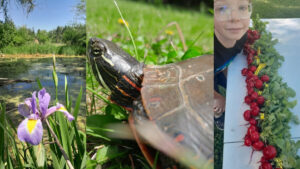
| This spring has given us encouraging signs that our no-till practices and efforts to rewild portions of HongIK ECO Farm are beginning to bear fruit. Where there was once closely mowed lawn, we watched not one but two mother turtles carefully lay their eggs. Prairie crayfish have returned, their distinctive chimney-like burrows appearing once again among our garden beds—a reminder that healthy soils support life both above and below ground. Garter snakes have also become regular visitors, quietly helping maintain a healthy balance in the ecosystem. |
| Around our pond, we were delighted to discover native blue flag wild iris blooming naturally. The chorus frogs have filled the evenings with song, while kingbirds, catbirds, and brilliant indigo buntings have brought color and music to our fields. In our pollinator garden, the first vibrant orange blossoms of butterfly weed are beginning to open, beckoning bees, butterflies, and other beneficial insects. |
| These moments remind us of a simple idea that guides everything we do at Hongik ECO Farm. We like to add one important word to a familiar phrase. Rather than simply working the land, we strive to work with the land. |
|
Working with the land means observing before acting, building healthy soil instead of overreliance on imported nutrients, creating habitat instead of removing it, and recognizing that we are part of a much larger living community. As the wildlife returns, it reminds us that restoration is not something we accomplish alone. It is something we participate in, one season at a time.
|